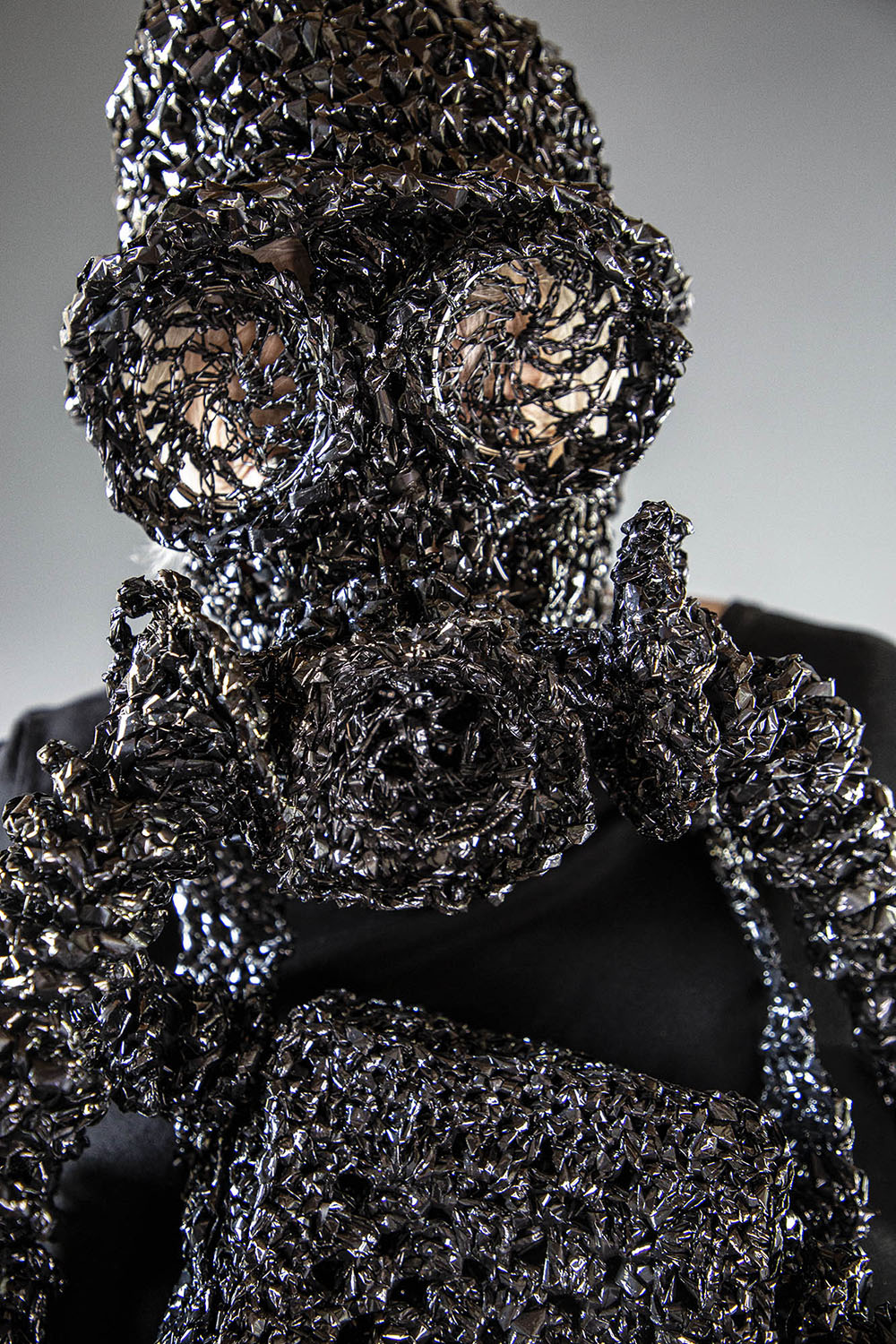
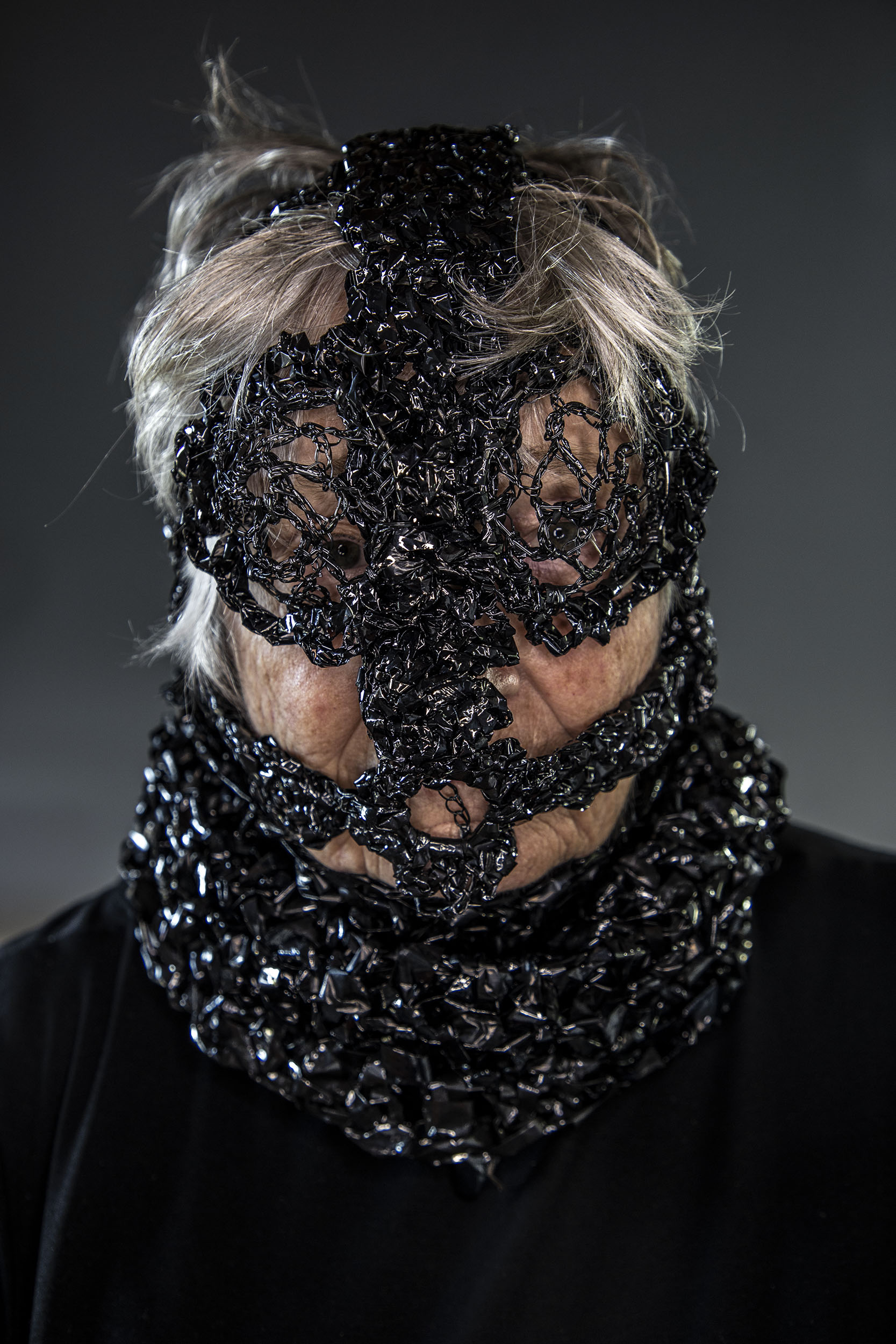
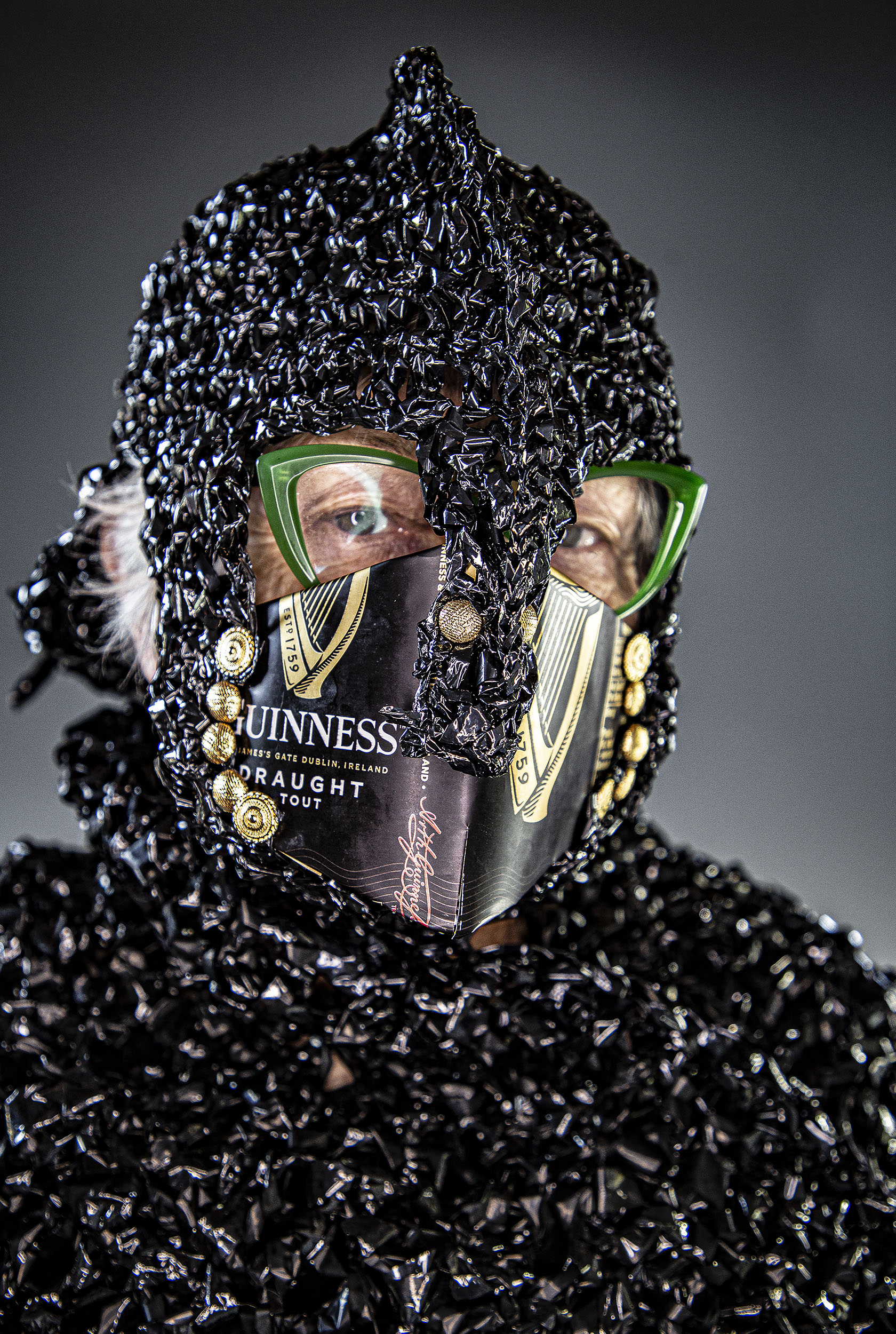
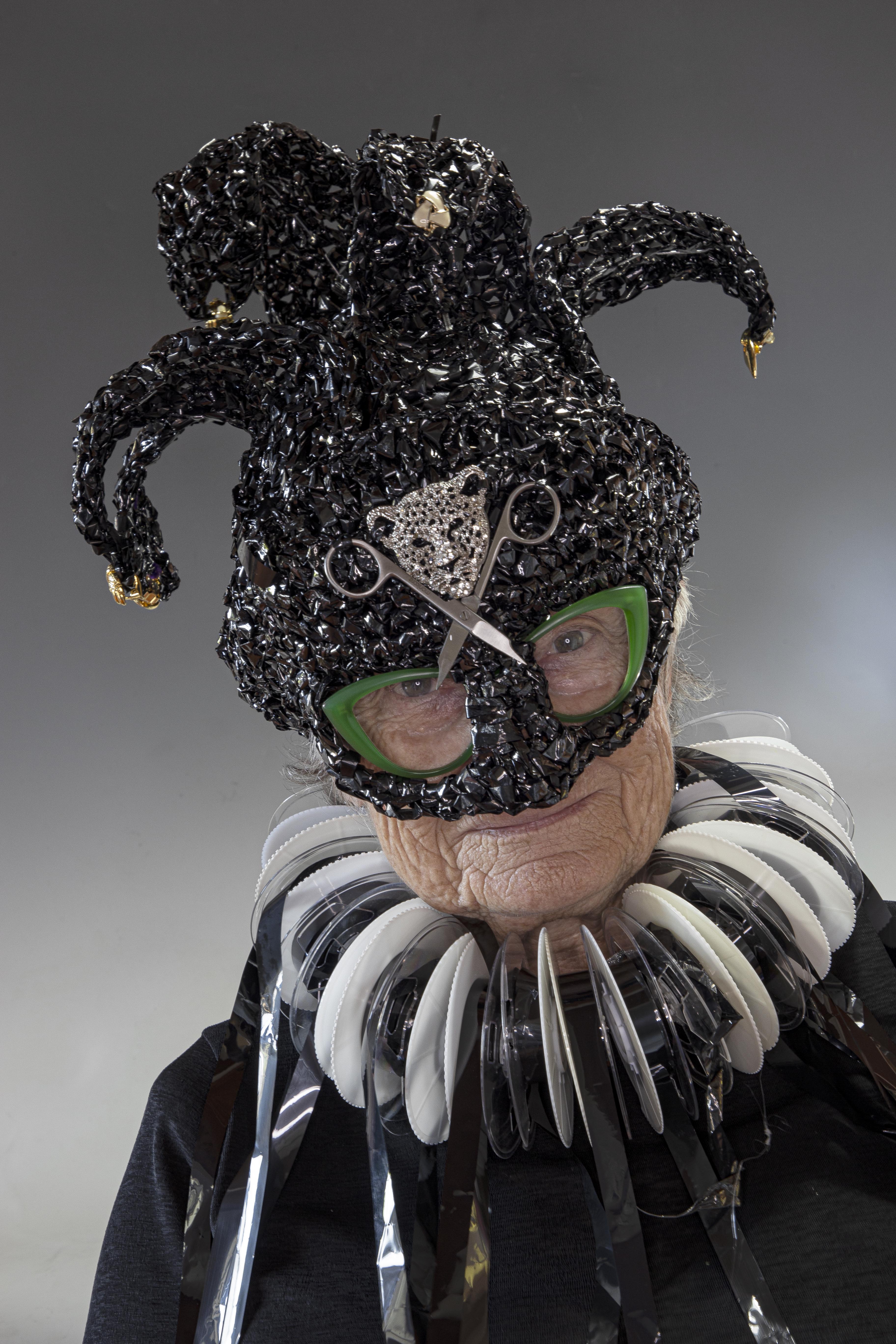
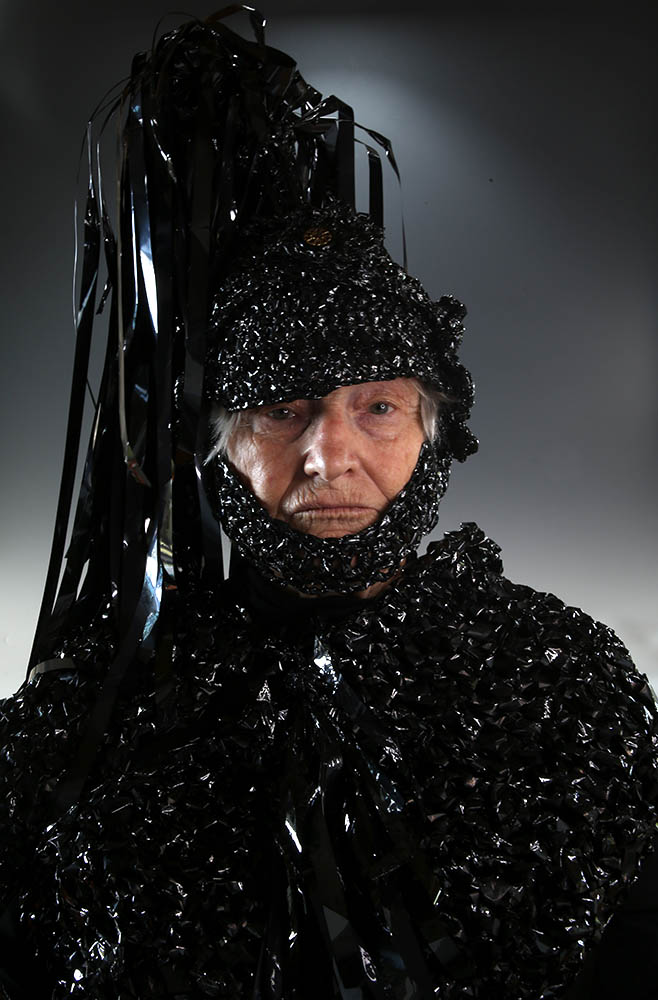
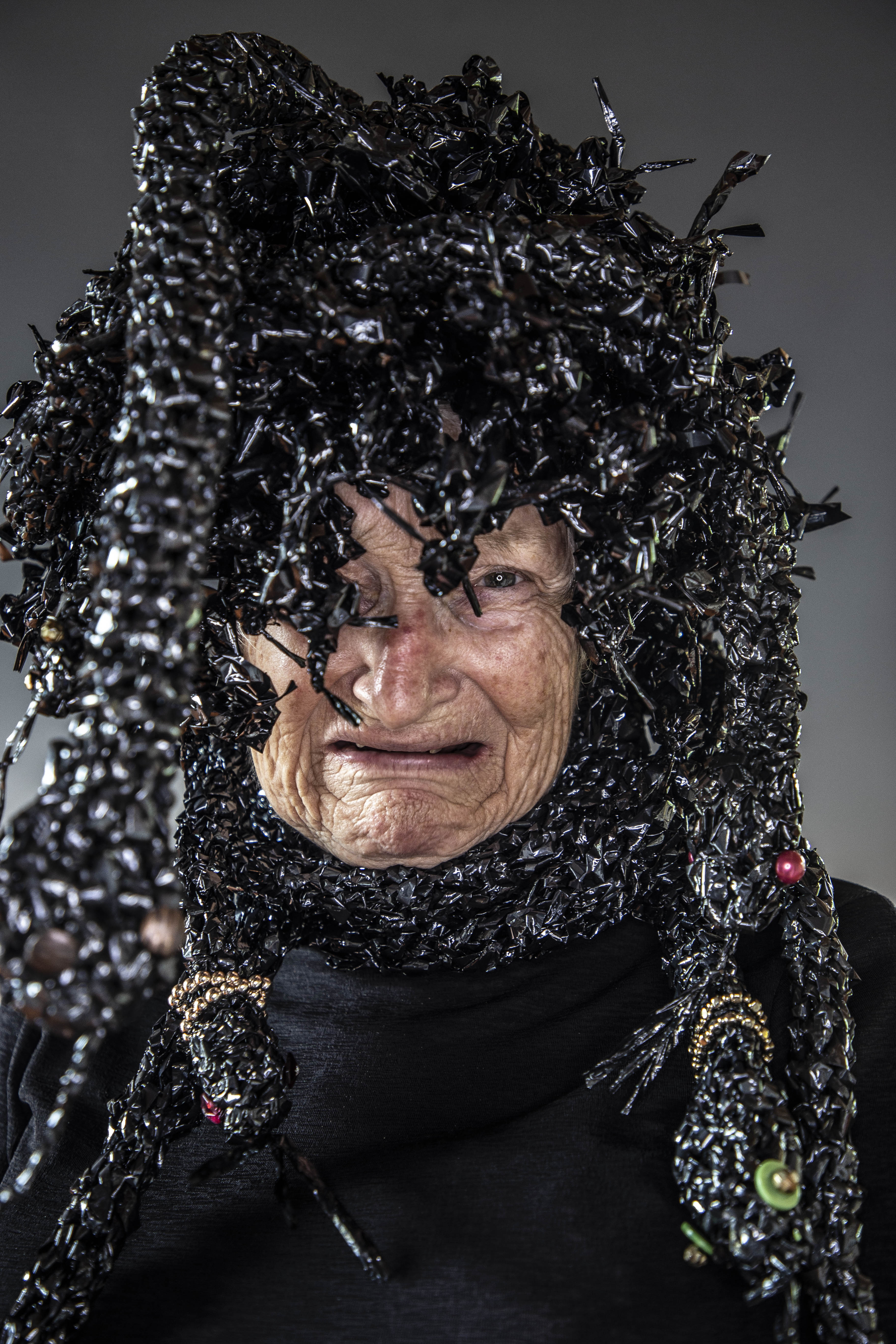
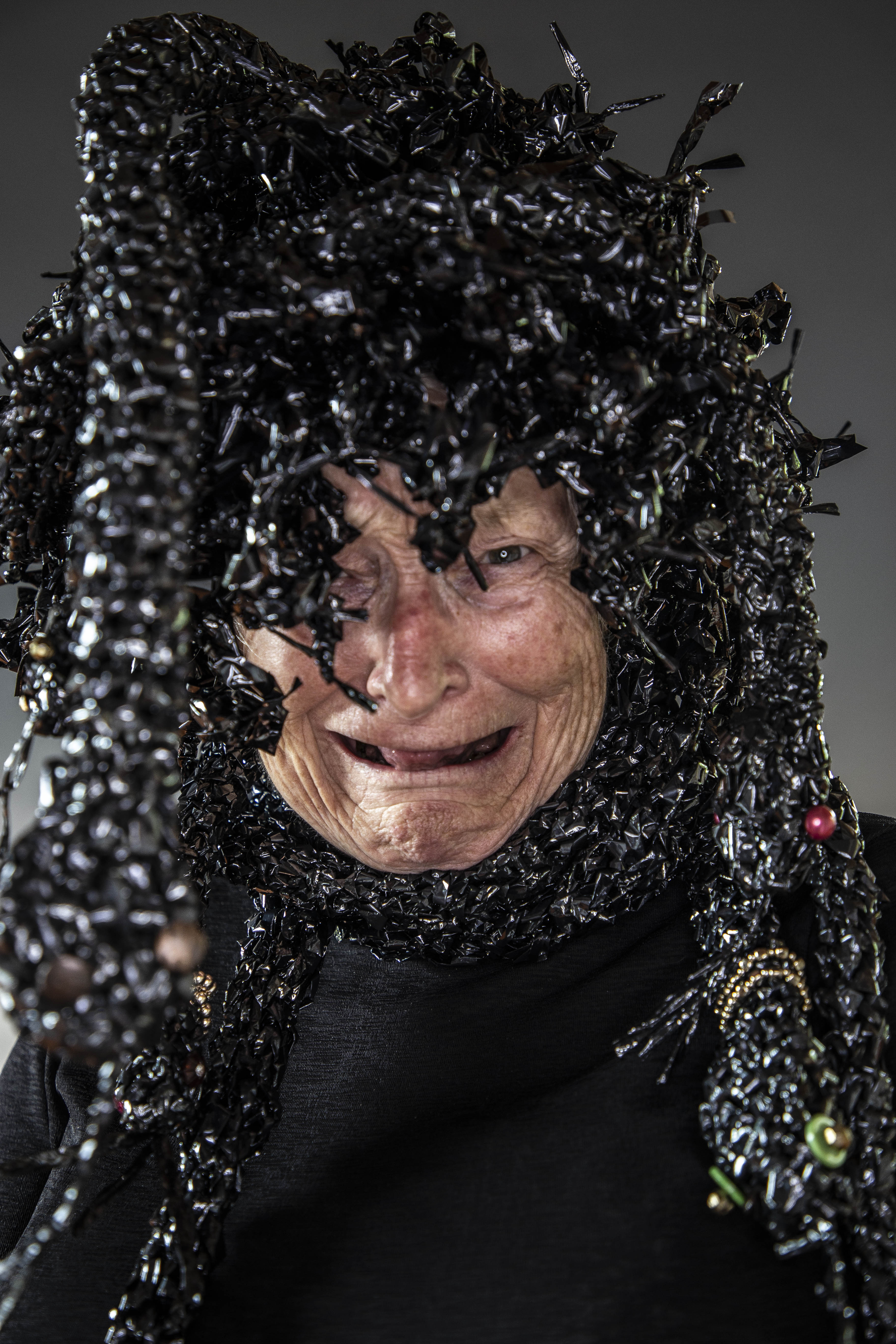
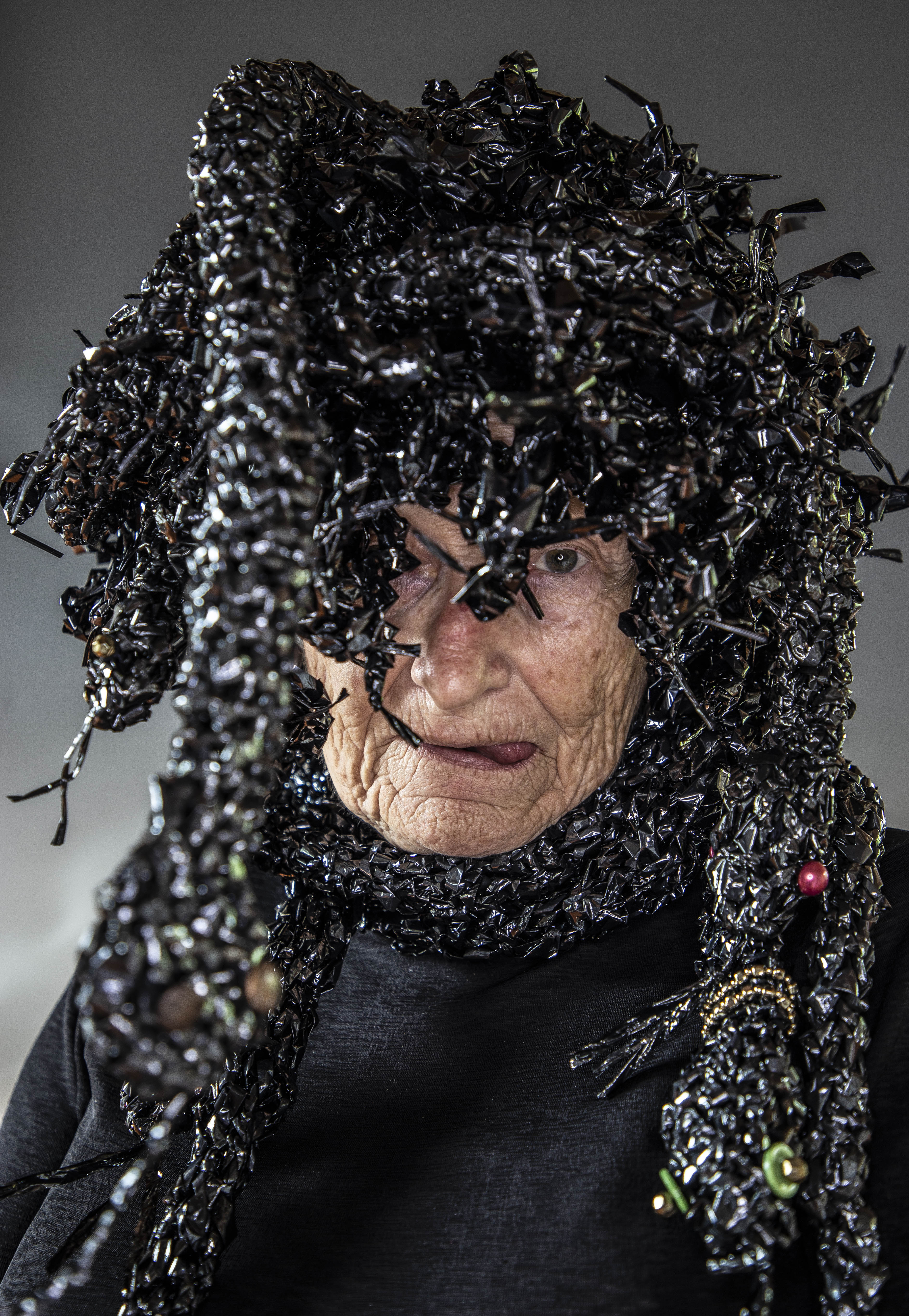
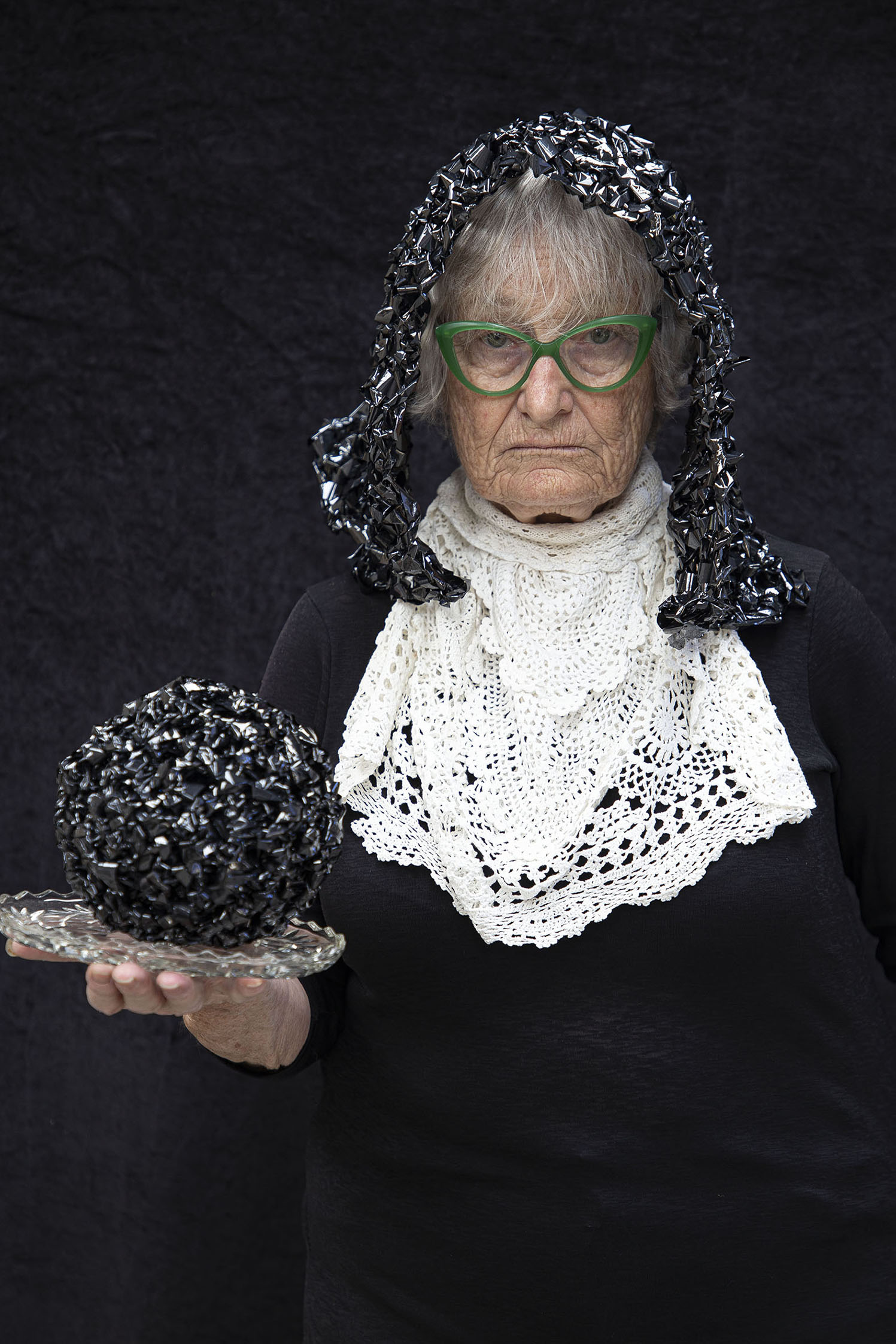
Karenne Ann and Heather Horrocks, who live on Wadawurrung Country in south east Australia, met through their separate creative practices two decades ago. Proudly declaring themselves ‘crones’, they led the classic life journey of women whose family and work life came first in their earlier decades. In 2022 they formed a collaboration named ISOyoh: ISO how sensitive a camera is to light and ‘yoh’ as a universal crochet instruction ‘yarn over hook’. Mid-Covid Heather stitched a gold granny-square mask for a bronze bust of Julia Gillard in the Ballarat Botanical Gardens. The mask was removed by security, but Horrocks kept replacing them. One is now in the collection of the Melbourne Museum. Horrocks then began contemplating other masks in history, starting with the 17th century bird-beaked plague doctor mask. Her masks use hundreds of metres of black film from discarded VHS tapes. The stories on the tape are woven into new narratives which reference historical figures such as Celtic warriors and 21st century Australian feminist heroes. Horrocks’ practice is almost entirely focussed on recycling, repurposing and re-imagining unloved materials. Similarly, Ann often reuses and repurposes materials in her creative practice, and in doing so she interrogates the spaces inhabited by incomplete, damaged, or distressed memories. Karenne’s past work has explored the effects of wrapping, exposing, swaddling and setting fire to objects.
Initially, Horrocks hired Ann to document her masks. However, in the process of photographing them, they realised there was a power in the masks as photographed objects when they were worn by Heather. In 2023 over 60,000 people saw their exhibition, Effacement, at the Art Gallery of Ballarat for Ballarat’s international Foto biennale. They have since had success Australia-wide, including as finalists in the prestigious Bowness Photographic Art Prize at the Museum of Australian Photography.


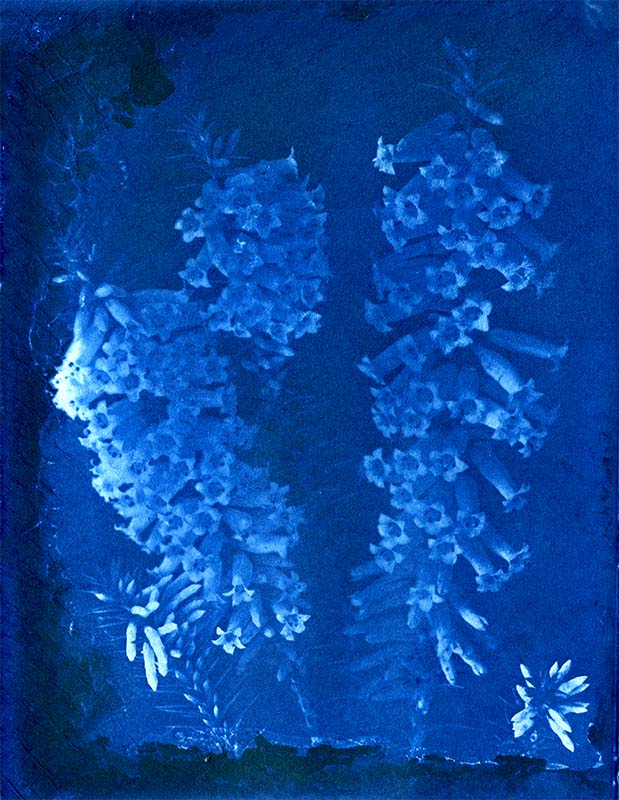
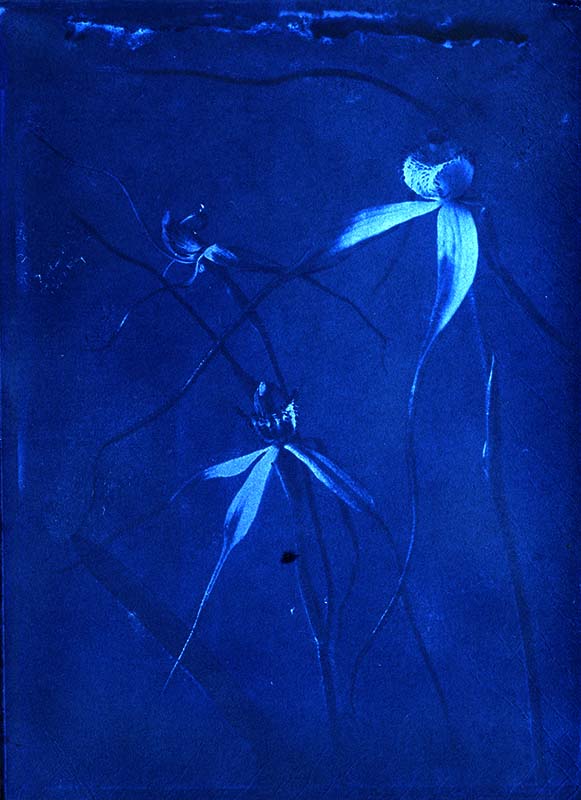
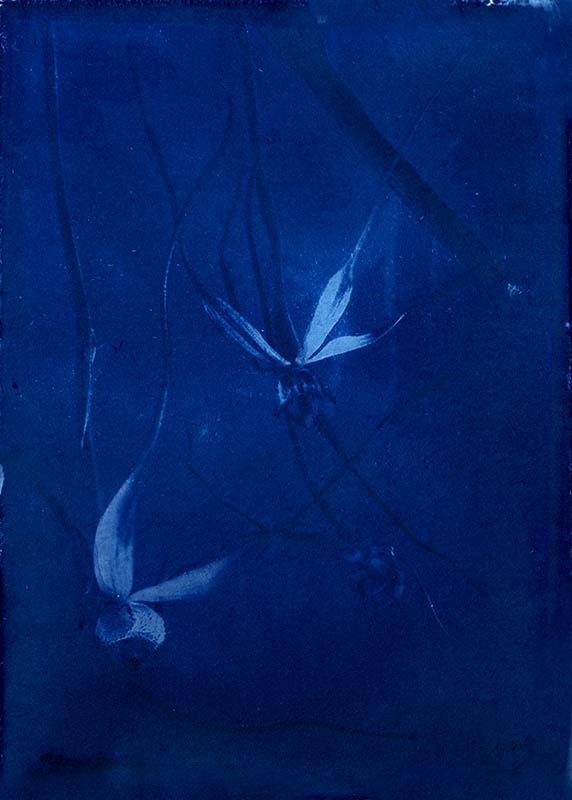

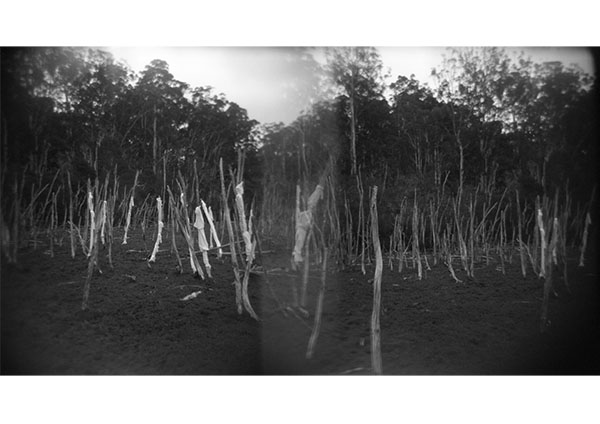
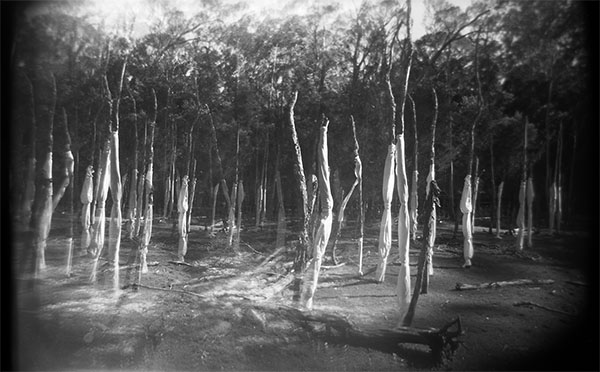

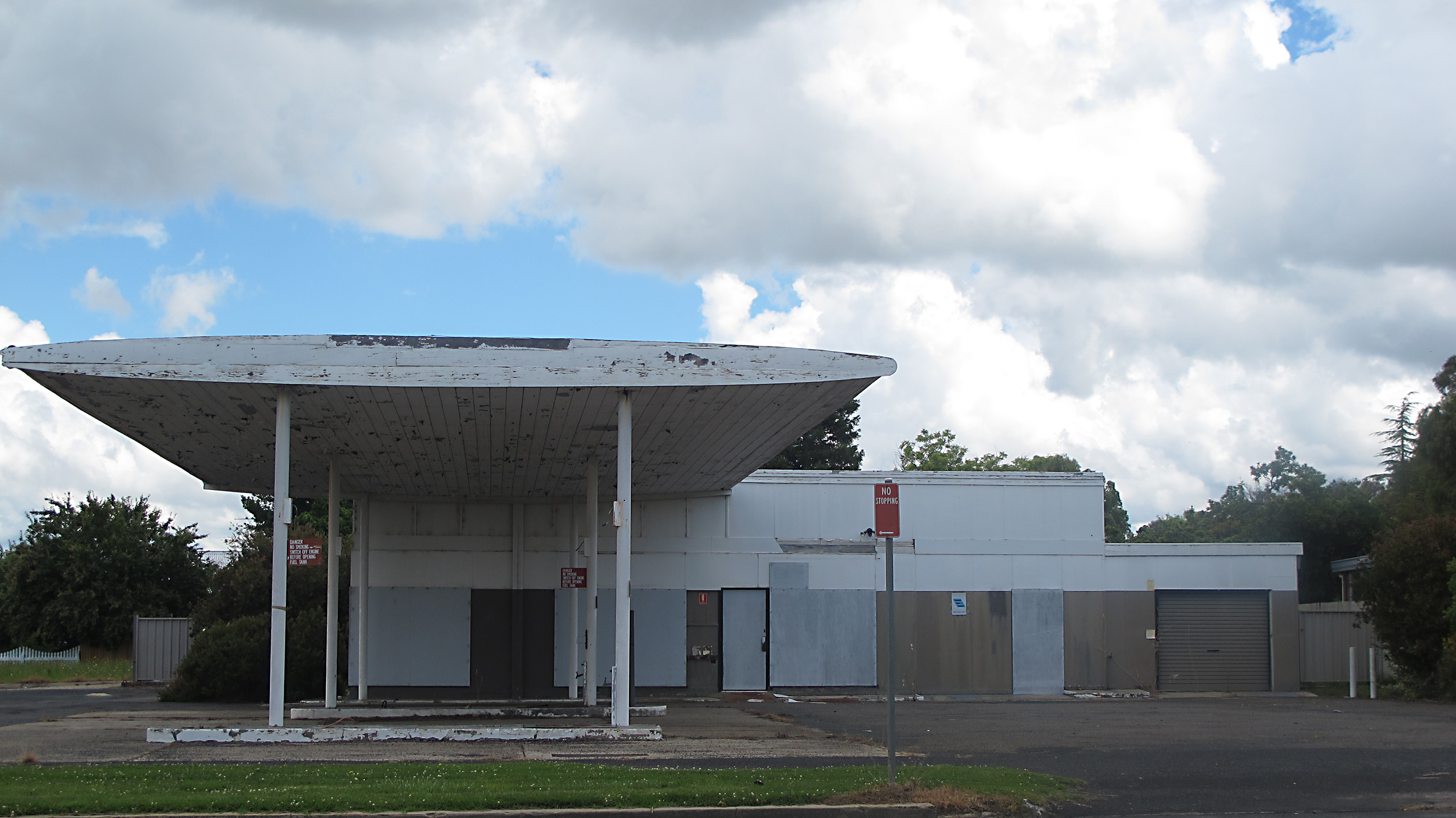
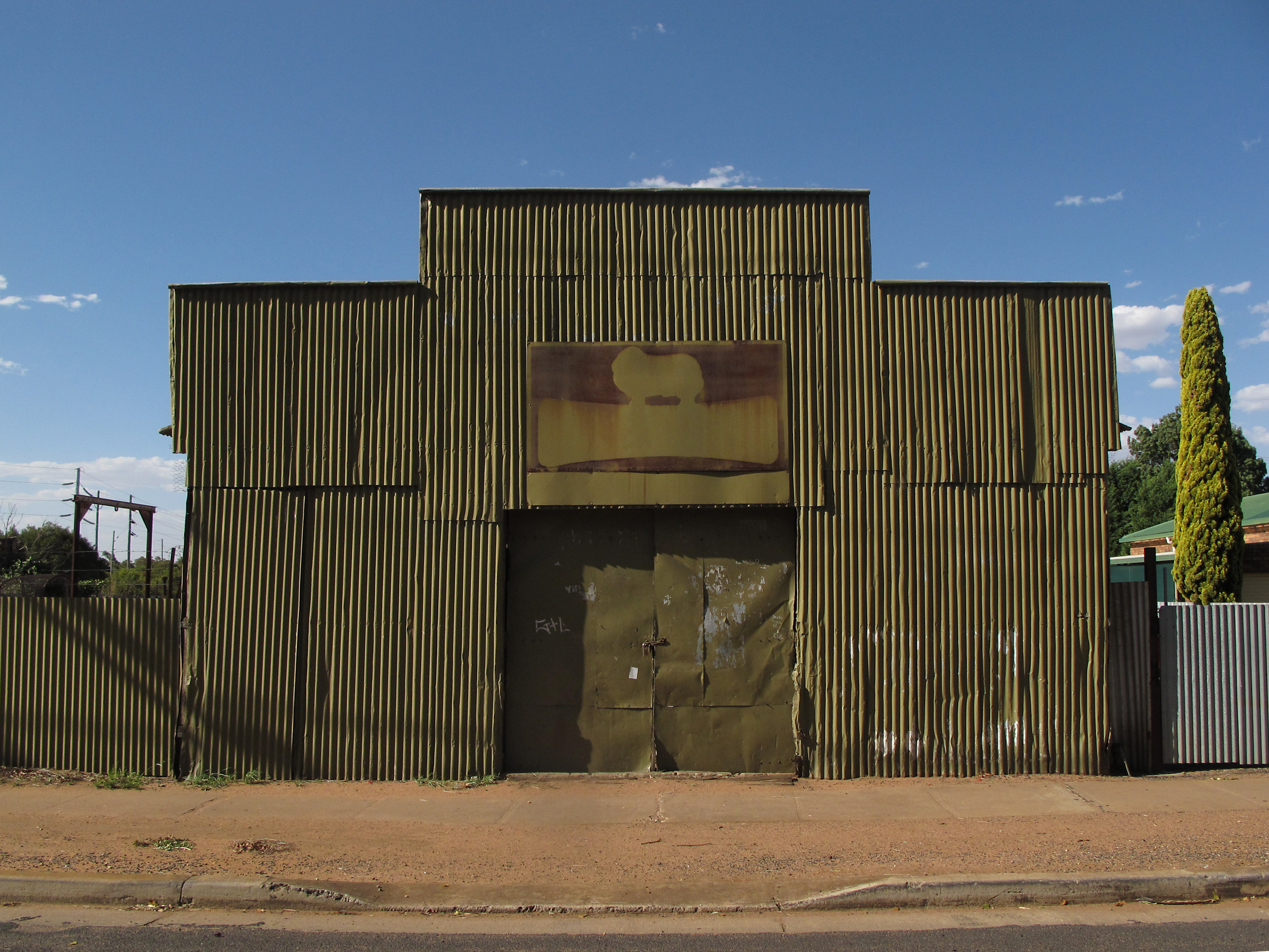
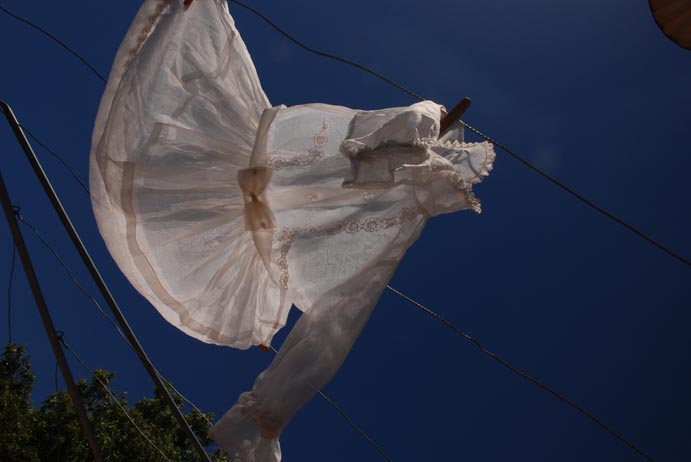
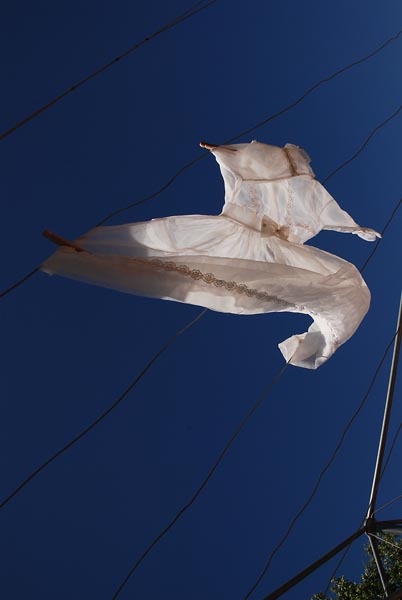
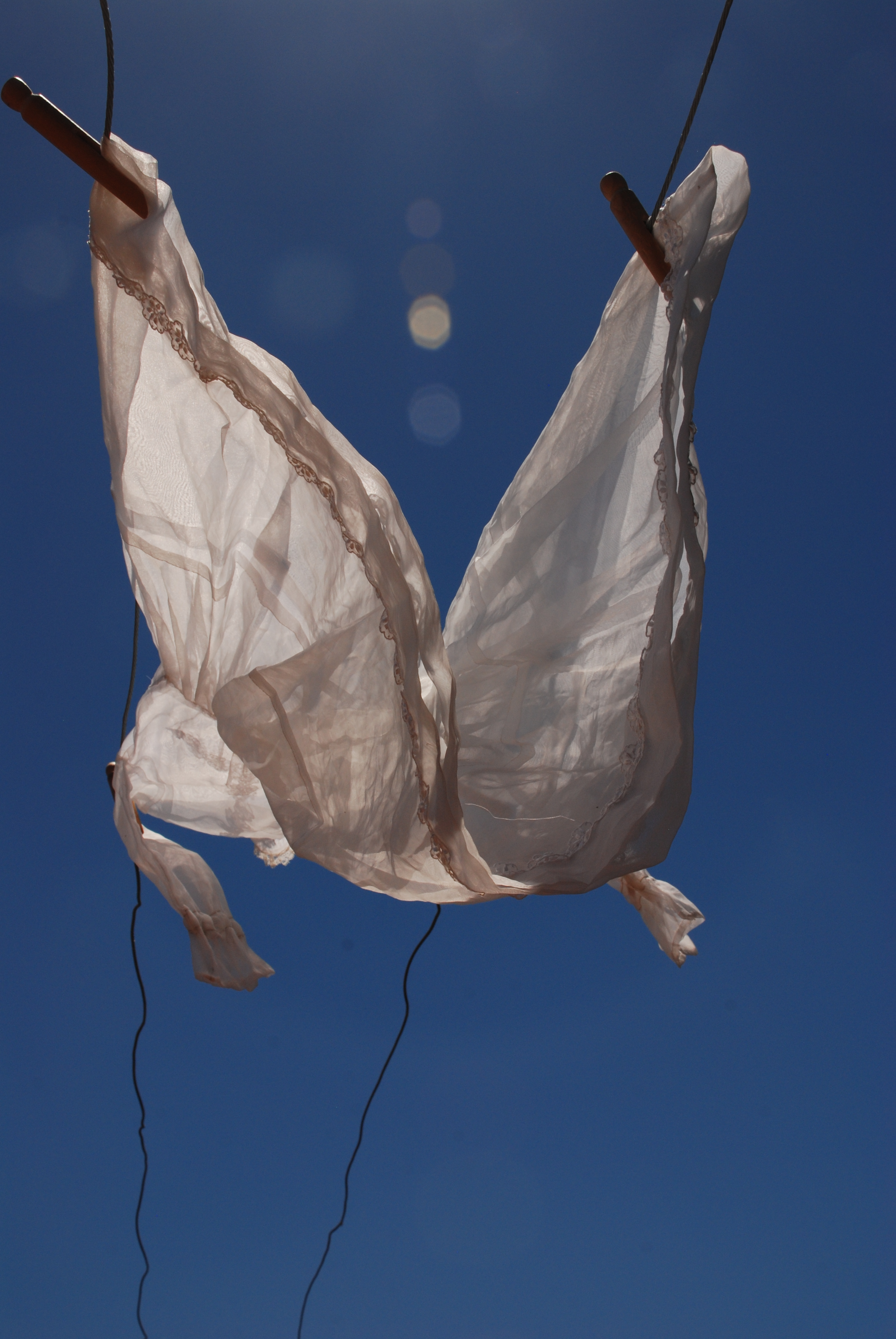
 Karenne Ann